


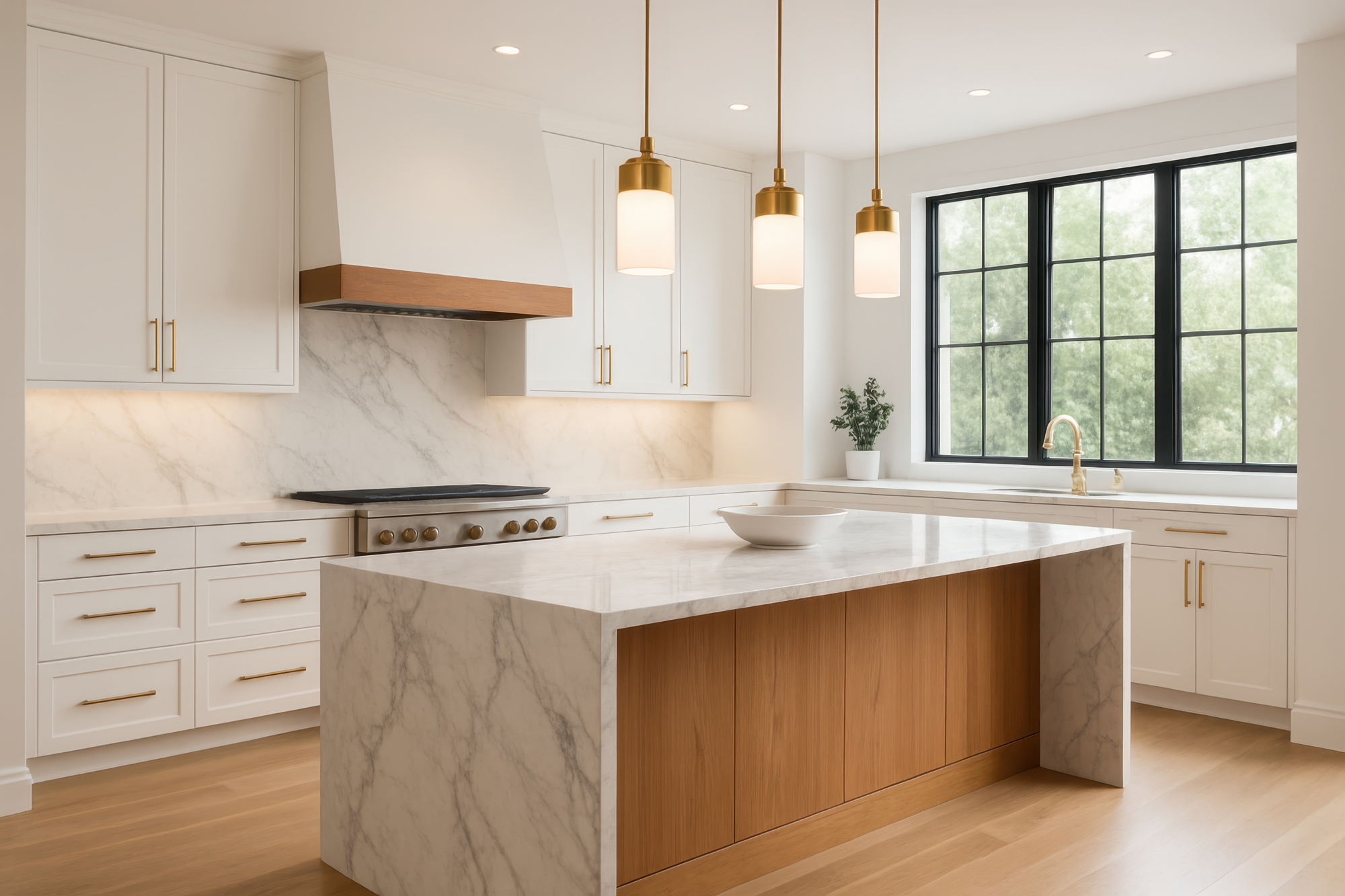
The kitchen is one of the hardest-working rooms in the house, which is why flooring decisions here feel more complicated than they do in a bedroom or hallway. A kitchen floor has to handle dropped utensils, chair movement, water near the sink, food spills, pet traffic, and daily cleaning. At the same time, it has to look good because most modern kitchens are visually connected to dining rooms, living rooms, and entryways.
For many homeowners, the decision comes down to hardwood flooring versus laminate flooring. Hardwood brings warmth, natural character, and long-term value. Laminate offers practical durability, stain resistance, and a lower-maintenance surface for busy households. The right choice depends on how your kitchen is used, how much moisture risk exists, and what kind of look you want throughout the home.
Why hardwood still feels right in the kitchen
Hardwood flooring gives a kitchen a natural warmth that is difficult to replicate. Real wood has variation in grain, color, and texture, which helps a kitchen feel less sterile, especially when paired with painted cabinets, stone countertops, or stainless steel appliances. In open-concept homes, hardwood also creates a smooth visual flow from the kitchen into the living and dining areas.
The main concern with hardwood in kitchens is moisture. Hardwood can perform well when spills are wiped quickly and the home has stable indoor humidity, but standing water is never its friend. Around dishwashers, refrigerators, sinks, and exterior doors, homeowners need to be realistic. A small splash is not the issue. Repeated moisture exposure, slow appliance leaks, wet rugs, and ignored pet accidents are what create cupping, staining, or finish damage over time.
Where laminate makes everyday life easier
Laminate flooring has become a stronger kitchen contender because today’s products are far more realistic than older shiny, flat-looking versions. Better visuals, textured surfaces, beveled edges, and stronger wear layers can give laminate a wood-look finish that suits many kitchens without the same upkeep expectations as natural wood.
For everyday spills, laminate is often easier to live with. Most quality laminate products resist staining from food, drinks, and tracked-in dirt when cleaned promptly. The wear layer helps protect against surface scratches from chairs and general kitchen traffic. However, laminate is not automatically waterproof unless the specific product is designed that way. The edges, seams, locking system, and installation quality still matter, especially near wet zones.
The technical differences homeowners should understand
Hardwood is a real wood product, so it responds to seasonal changes in moisture and temperature. It can expand, contract, and show gaps depending on indoor humidity. Engineered hardwood is usually more dimensionally stable than solid hardwood because of its layered construction, making it a better candidate for some kitchens than traditional solid wood.
Laminate is built differently. It typically has a dense core, a decorative image layer, and a protective wear layer. Its performance depends heavily on core quality, locking system strength, moisture resistance, thickness, and installation prep. A cheap laminate with a weak locking profile can separate at the joints, sound hollow, or swell at the edges if moisture gets into the seams.
Which one handles kitchen messes better
For fast cleanup, laminate usually has the edge. Crumbs, muddy shoes, sauce splashes, and everyday spills are easier to manage on a tough laminate surface. It can be a smart fit for homes with kids, pets, or heavy kitchen traffic where the floor needs to work hard without making the homeowner nervous.
Hardwood wins when the goal is long-term character, natural texture, and refinishing potential. If the surface gets worn over time, many hardwood floors can be professionally refinished, depending on the product and remaining wear layer. Laminate cannot be sanded and refinished. Once the surface is deeply damaged, replacement is usually the practical route.
How to choose based on your home
Choose hardwood if your kitchen connects directly to existing hardwood, if you want a premium natural finish, and if your household can manage moisture quickly. It is also worth considering if resale appeal and long-term refinishing potential are priorities.
Choose laminate if practicality comes first. It is especially useful for active kitchens, homes with pets, rental properties, or homeowners who want a wood look with less worry about surface wear. The key is choosing a quality laminate with strong locking joints, a suitable wear rating, good underlayment, and proper moisture precautions.
Kitchen flooring should be chosen with real household habits in mind, not just color boards under showroom lighting. At McCullough’s Flooring, homeowners can compare hardwood and laminate options side by side and get guidance on durability, moisture concerns, underlayment, transitions, and installation details.
Visit Belleville, IL to explore kitchen flooring options in Belleville, IL. We proudly serve Belleville, IL, Edwardsville, IL, O'Fallon, IL, Collinsville, IL, and Swansea, IL . If you are deciding between hardwood warmth and laminate practicality, contact us today for product guidance, samples, and a flooring recommendation that fits the way your kitchen actually works.


