


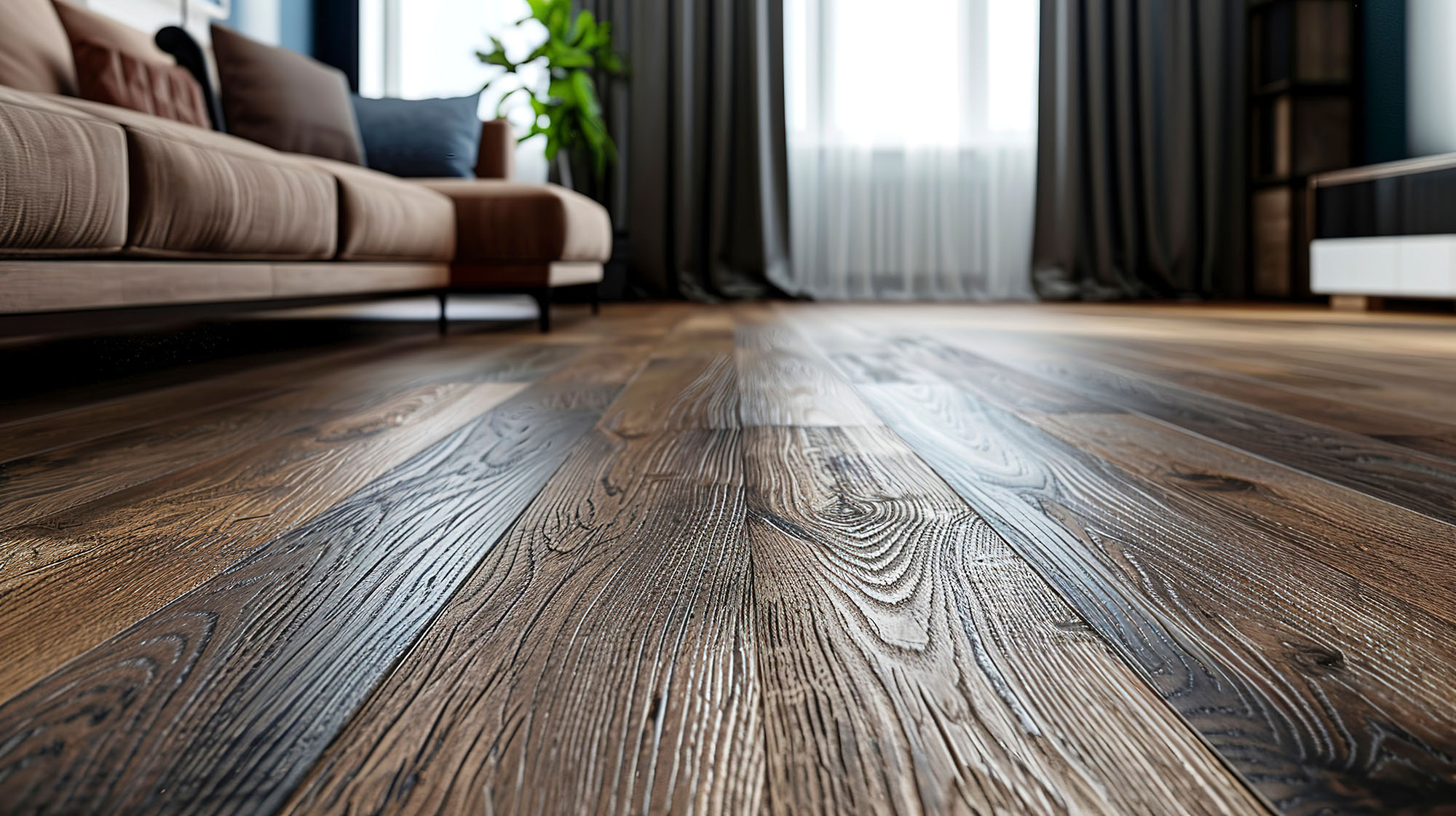
Most furniture protector advice treats felt pads and rubber cups as basically the same product doing the same job, just in different shapes. That is not quite right once you look at what each material actually does when it sits under a couch leg or a dining chair for months at a time. Laminate flooring has a wear layer on top designed to resist scratches and light impact, but that layer reacts differently depending on what is pressed against it continuously, and that distinction rarely makes it into general flooring care advice.
Knowing what is actually happening at that contact point helps explain why some furniture protectors work beautifully for years while others leave a mark nobody expected.
What Felt Pads Actually Do At The Contact Point
Felt is a soft, slightly textured material that distributes weight across a wider surface area and allows a small amount of air movement underneath the furniture leg. This matters more than it sounds, because trapped moisture or heat against a hard surface is often what causes a mark to develop over time, not the weight of the furniture itself.
Felt does wear down eventually, and a flattened, hardened felt pad can actually start to behave more like a hard surface than a soft one. This is the part that often gets missed. A felt pad protects well when it is fresh, but an old, compressed pad left in place for years can lose the exact quality that made it useful in the first place.
Why Rubber Cups Are A More Complicated Choice
Rubber and certain PVC based furniture cups can contain plasticizers, chemical compounds that keep the rubber flexible, and those compounds can slowly migrate out of the rubber and into contact with whatever surface it is sitting on. Over an extended period, this can leave a yellowed or discolored mark on some laminate finishes, particularly in a spot that gets consistent pressure and little air exposure.
This does not mean every rubber product is a problem. Furniture grade rubber designed specifically for use on hard flooring is manufactured differently than generic rubber, and manufacturers who make flooring safe protectors test for this exact interaction. The issue tends to come from off brand or repurposed rubber items, like a random rubber washer or a cheap import furniture cup, rather than a product actually built for flooring contact.
What This Means For Heavy Furniture Specifically
Heavier pieces, like a sectional sofa, a china cabinet, or a piano, put sustained pressure on a small contact area for years without moving, which is exactly the condition that makes any material interaction more likely to show up eventually. Lighter furniture that gets moved and rearranged periodically is much less likely to develop a noticeable mark, simply because the contact point keeps changing.
For genuinely heavy or rarely moved furniture, a wide felt pad rated for the weight, replaced every year or two once it starts to compress, tends to be the safer long term choice over a rubber cup left in place indefinitely. This is also a good moment to periodically slide heavy furniture slightly, even an inch or two, just to avoid any single point bearing the full weight for years without ever shifting.
Reading The Fine Print On Furniture Protectors
Not every product labeled as a floor protector is tested specifically against laminate finishes, and this is worth checking before assuming a product from a big box store is automatically safe. Looking for protectors marketed specifically for use on laminate or engineered hardwood, rather than a generic multi surface label, gives a better indication that the manufacturer actually accounted for finish compatibility.
This is a small detail, but it is the kind of thing that saves a homeowner from discovering a discolored ring under a piece of furniture years after it was moved into place. A few extra minutes reading a label is a lot easier than dealing with a permanent mark later.
Protecting Your Floor The Right Way
Choosing between felt and rubber is not about picking a universal winner, it is about matching the protector to the furniture, the weight involved, and how long it will sit in one place. A little attention here goes a long way toward keeping a laminate finish looking the way it did on installation day.
McCullough’s Flooring can walk through furniture protection recommendations specific to the laminate product you choose, since different finishes and textures respond a little differently to long term contact.
If you are furnishing a room with new laminate flooring, browse our Laminate Flooring selection to see finish options built to hold up under everyday furniture use. McCullough’s Flooring proudly serves Belleville, IL, Edwardsville, IL, O'Fallon, IL, Collinsville, IL, and Swansea, IL from Belleville, IL in Belleville, IL. Contact Us to ask about furniture care recommendations for your specific flooring choice.


